How to Transplant Tomato Seedlings With How to Video


How to grow tomato seeds and how to transplant tomato seedlings - includes a how to video and pics for step by step beginner gardening

How to Transplant Tomato Seedlings 

Are you hoping to grow a garden this year? One of the first plants I would recommend trying is the tomato plant. The yield is typically quite plentiful and the fruit is very multi-functional – from salads to sauces thus, making the tomato plant one of my personal favorites.

But, how do you do it?

It’s actually easier than you might think. Using a seed starting container like this one below

{affilink} Seed Starting Greenhouse - Growing Plants from Seeds and How to Transplant


Carefully fill slots with dirt {I prefer an organic starter}

Then, simply take your tomato seeds {preferably non-GMO, non-hybrid, organic} I like to buy mine here whenever possible.

Carefully water seeds {try not to over water…remember the seeds are just tiny at this point and don’t require a full fledged flooding}, if your greenhouse seed starting tray has a lid – cover and place in a sunny window. If you do not have a lid, you may opt to cover with plastic wrap to lock in heat until sprouting occurs. Water daily and wait for the sprouting to begin.

As your seedlings start to sprout and develop {2-3 leaves} it is time to separate and transplant into a bigger pot. If you planted several seeds in one cell of your original seed starting tray you will either have to 1) separate the new tomato sprouts 2) cut the weaker of the two plants to allow optimal growth {if too many plants are planted in the same cell and not eliminated they will become root bound and will not be able to get the nutrients they need.}

So, you’re asking is it totally necessary to eliminate a perfectly good sprout- and, the answer is yes! You must separate or eliminate the weak ones…. {FYI chickens love the little sprouted seedlings this makes the heartache of plucking perfectly good little spouts a little easier – at least then they aren’t going to waste.}

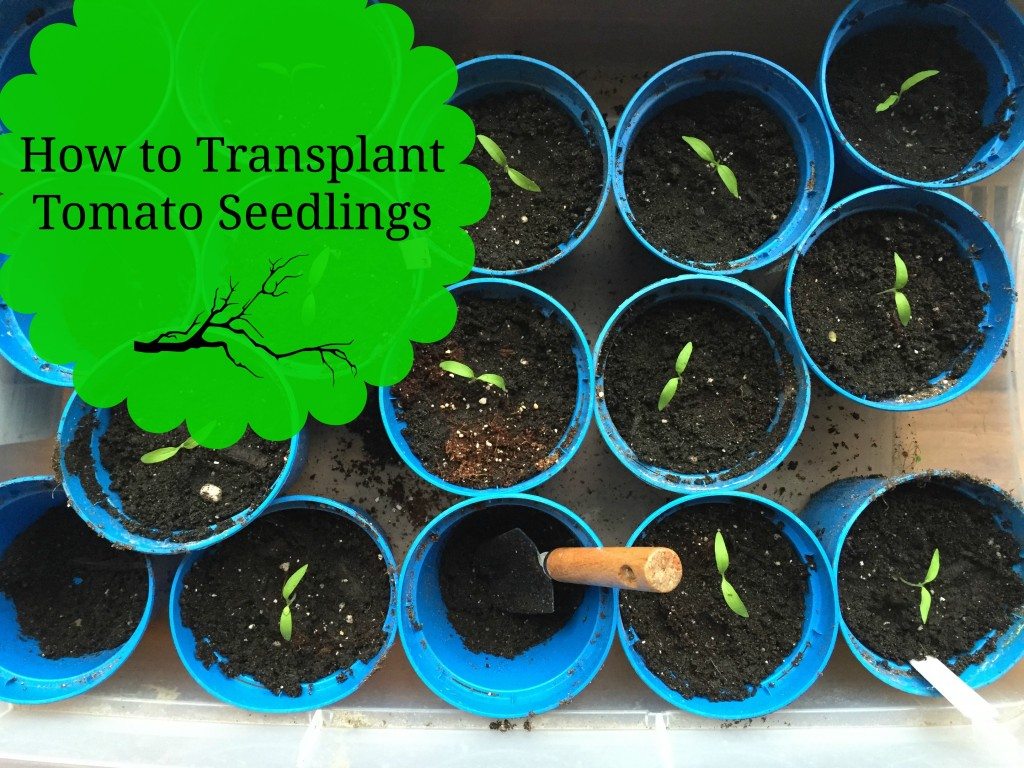
Ok., now the fun part – carefully take your ‘chosen’ seedlings out of their original seedling tray – transferring them to a pre filled larger pot

like this –> Plastic Pots for Plants, Cuttings & Seedlings, 4-Inch, 30-Pack

Now, see my seedlings below – do you see all that ‘fuzzy’ looking stuff on the stem? When transplanting your seedlings into the larger pots {like the ones above} you will want to completely cover up all that ‘fuzz’ {yes, that’s the technical term..LOL}. Cover with dirt up to the leaves. How to grow tomato seeds and how to transplant tomato seedlings - includes a how to video and pics for step by step beginner gardening As your seedling begins to grow larger all of that ‘fuzz’ will become new roots – pretty amazing, right? Want to see how I did mine? You can watch the video HERE

Not quite ready to start your garden PIN THIS post for later!
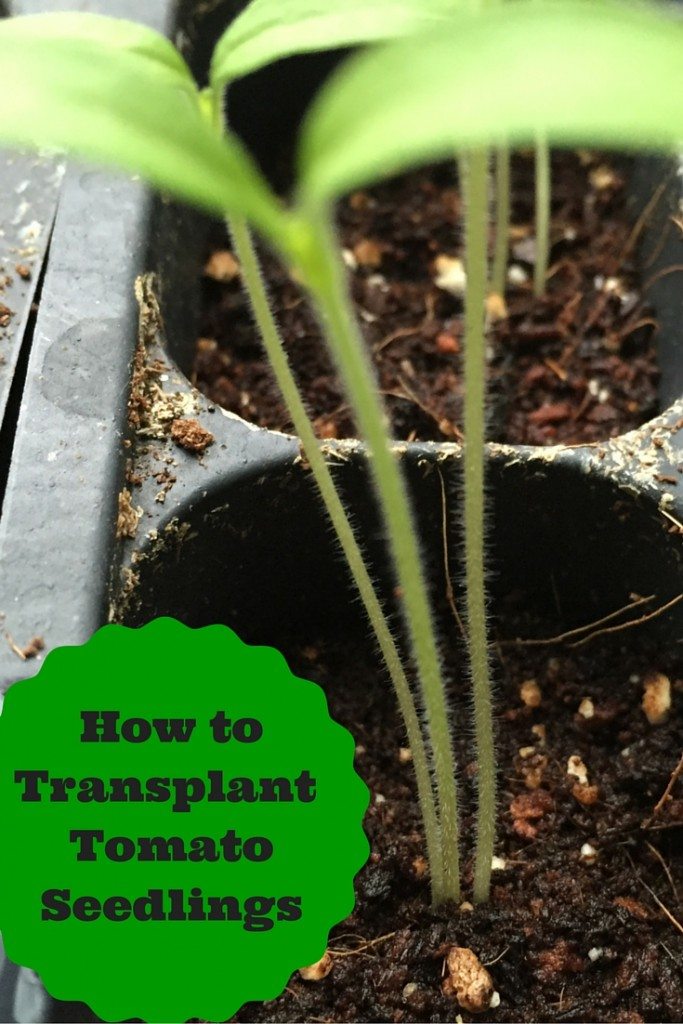
 

How to Transplant Tomato Seedlings

The Best Crockpot Easter Dinner Meal Plan Round Up


The Best Crock Easter RecipeRound Up
I have a little confession – I love to cook. I love good food but, if I can find an easier way to spend less time in the kitchen I am soooo there! And, I may have a slight obsession with my crockpot.

This year we will be changing things up a bit for Easter dinner. We are having friends over for a brunch and Easter egg hunt in the morning {thinking I will be making an egg bake breakfast casserole and my caramel french toast bake.}

But, what about dinner?

I was racking my brain trying to figure out how I could entertain in the morning and still pull off a somewhat traditional Easter dinner for my family and then, it hit me – my trusty old crockpot. Yep, I am pretty much over the moon excited we are going to have the best crockpot dinner ever and guess what, it’s going to be cooking while I hang out with our friends and family. Everybody wins!

{Oh, and if you only have one crockpot I highly recommend getting a second as it’s worth it’s weight in gold. We have 3 different sizes and I love them all!}

So, here’s the scoop for;

The Best Ever Easter Dinner Crockpot Meal Plan


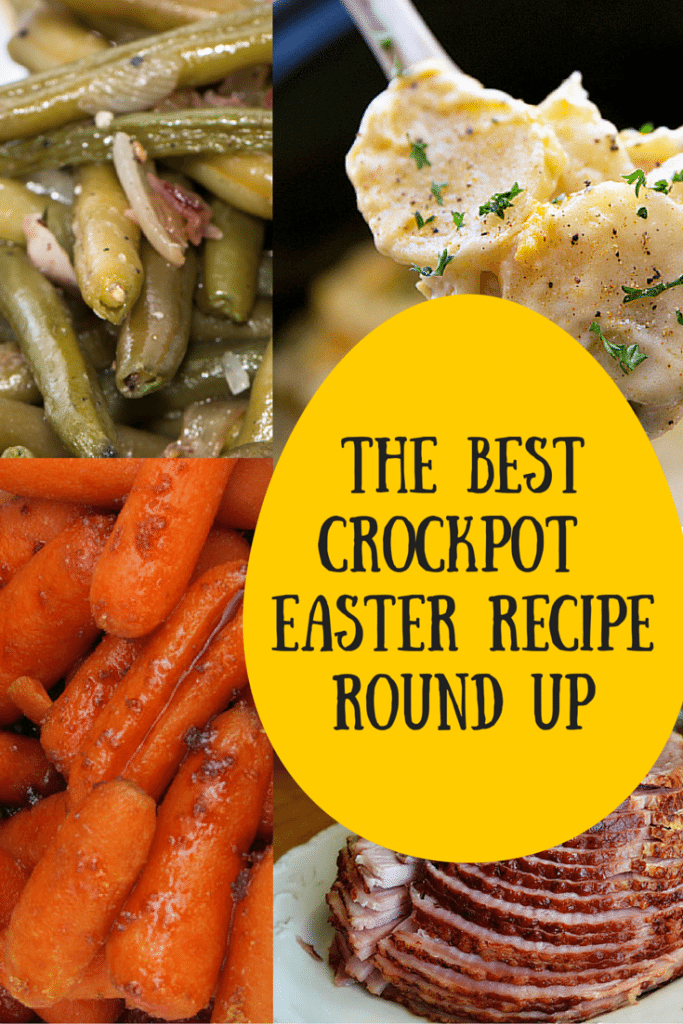
The Best Crockpot Easter Dinner Meal Plan Round Up-maple-brown-sugar-ham-crockpot-green beans- corn dip- homemade apple sauce- home cooking goodness with less time in the kitchen

I am excited to try Life in the Loft House‘s Crock Pot Maple Brown Sugar Ham recipe – we are big maple syrup fans so this just sounds divine. A brown sugar rub, with a maple syrup and pineapple glaze cooked on low while I play with the kids – yep, I think I can do this.

Moms with Crock pots shared an awesome looking green bean casserole recipe – we will not being using bouillon cubes as most are not gluten free. But, we will sub them out with Better than Bouillon. *We will not be adding our bacon until the end as soggy bacon bits get me every time {gah}.

If you have never made crockpot brown sugar carrots you are missing out – they are so easy!


The Best Crockpot Easter Dinner Meal Plan Round Up


LifeCurrents Crockpot Corn Dip  looks like the perfect side dish or maybe even pre-dinner appetizer. Surely, I know my children can not be the only ones that insist on eating the entire hour before we sit down to a meal, right?!? Frozen corn, cream cheese, cheese, a zip of jalapeño, and spices slow cooked and served with organic corn chips should hold the littles over.

No Easter Dinner would be complete with out some homestead applesauce  and I’m thinking these easy au gratin potatoes inspired by Chelsea’s Messy Apron should do the trick…

Easy-Slow-Cooker-Potatoes-Au-Gratin-a-perfect-Easter-side-dish-save-room-in-the-oven-with-this-easy-dish-Plus-a-secret-tip-to-get-the-potatoes-crispy

And, if there is room for dessert after all that food I am thinking a scoop of ice cream from the local dairy farm should do the trick.

Get The Homestead DailyFREE-2

How Much Should You Plant In Your Garden for a Years Worth of Food for Your Family

How Much Should You Plant In Your Garden for a Years Worth of Food for Your Family-2

How much should you grow in your garden for a years worth of food for your family?

I don’t know about you, but every year I feel the cool air quickly turn to spring and all of a sudden (insert panic) I can’t seem to remember how much of anything to plant.

And, every year I seem to ask myself the same question; “how much do I need to plant in our garden to supply my family with enough food for the winter?”

Are you trying to figure out how much you will need too?

Well, I’ve gathered up some of my favorite resources and I’m hoping to break it all down for you. So, you can take the guess work out of your garden planning and spend more time actually gardening.

If you are new to My Happy Homestead you can ‘meet our family here“. We have not always lived in the country; in fact, most of our lives we have  lived in the city. So, growing all of our own food was not really an option in the past; although, we certainly did the best we could with what resources we had available at the time.

We had strawberry gardens, a raspberry garden, a small scale garden, and picked local seasonally ripe food from area farms whenever possible. We ordered a cow, a pig, and shopped at local famers markets on a regular basis. You can check out how I shop for our family of 6 once a month here.

All that said, our ancestors did not have the luxury of having a grocery store on every corner they depended solely upon growing a garden, having a farm, saving seeds, and preserving their harvest for survival. A garden was not a tiny, pretty little space in a perfectly manicured back yard – the garden was the entire yard. There wasn’t weekend dance classes, sporting events,  and weekly parties to attend. And, there certainly wasn’t countless vacations to be had. Life was the farm, and the farm meant survival.

Since I only shop once a month for our family of six I am keenly aware of how much food we consume. I pretty much have it down to a science {now, that goes with out saying as the kids have gotten older I have had to make some adjustments}.

But, I know we need 5-6 six packs of yogurt, 5 cans of each kind of bean {kidney, black, pinto, etc}, 1 Costco size sour cream, 3-4 gallons of milk, 2 lbs of ground meat for every meal, 8 packs of waffles, 3 bags/boxes of cereal, and on, and on.

How Much Should You Plant In Your Garden for a Years Worth of Food for Your Family

So, just how much ‘How Much Should You Plant In Your Garden for a Years Worth of Food for Your Family’ {disclaimer some of these we still have not grown but, this is based on my personal experience and research}

Asparagus 1-4 plants per person

Bush Beans 10- 15 plants per person

Pole Beans 10-15 plants per person

Beets 10-15 plants per person

Broccoli – 8 plants per person

Brussel Sprouts – 4 plants per person

Cabbage – 5 plants per person

Carrots 20-30 plants per person (100 seed pack would/should feed a family of 6)

Cauliflower – 5 plants per person

Celery – 4-8 plants per person

Corn – 20-40 plants per person

Cucumber – 5 plants per person

Egg plant – 1 plants per person (plus an additional 2-3 per family)

Kale – 1 5′ row

Lettuce – 10 -12 plants {obviously you can no preserve this over the winter months but, you can stagger your growing to harvest most of the year)

Onions – 30 plants per person

Peas – 30 plants per person

Peppers – 8 plants per person

Potatoes – 20-25 plants per person

Pumpkins – 1 plant per person {1-2 additional for the family}

Rhubarb – 2 crowns per family

Spinach – 10 -20 plants per person

Summer squash – 3 plants per person {there’s nothing like shredded zucchini already prepared for quick breads)

Winter Squash – 2 plants per person

Sweet Potatoes – 5 plants per person

Tomatoes – 5-8 plants per person

Another way to figure out how much your family would need to grow for the winter is think of how much your family consumes and research the approximate yield on a given plant.

For example; if it was estimated that a 10 ft. row of bush beans would yield 3-5 lbs. yield then, I know I would need approx. 100+ ft. row to sustain my family over the winter as we consume approximately 5-6 lbs. of green beans per month.

Of coarse this could not be broken down into an exact science since weather, natural disaster, and pests can all affect yield.

What I can tell you is this – plant what you like to eat and plant what you will use. If you are short on space plant what you can with what room you have available.

Do you have room behind your garage? That’s where our berry garden used to be. Try planting food where you would plant flowers – replace the dying tree in the corner of the yard with a fruit tree instead of an ornamental piece.

And, start learning about harvesting your seeds – there is nothing more rewarding than knowing you grew something from a tiny seed and you were able to save the seeds for next years harvest thus, repeating the cycle of life.

Hungry for more gardening goodness check out these (affiliate links) –